One question comes up often when people plan an event: if we already have a photographer, do we really need a videographer too?
It is a fair question. Events already have many costs, from venue and production to food, sound, lighting, design, talent, logistics, and the small details that always appear near the end. Video can feel like another line item.
But the better question is not whether photography or videography is better. The better question is what the event needs to preserve after it is over.
Photography freezes the moment. Videography brings back the experience.
Photography and videography are not competing services. They capture different layers of the same event. One gives you fast visual proof. The other carries movement, voice, sound, pacing, emotion, and story.
Photo And Video Are Not The Same Job
A strong photo can show a speaker on stage, a product reveal, a team moment, a crowd reaction, or the final setup after weeks of preparation. That is why photography matters. It gives people proof in one frame.
But video gives sequence. It shows what happened before the moment, how the moment unfolded, and what the room felt like after it happened. It can preserve the tone of a speech, the applause after an announcement, the movement through a space, and the rhythm of the day.
A photo shows what it looked like. A video helps people feel what it was like.
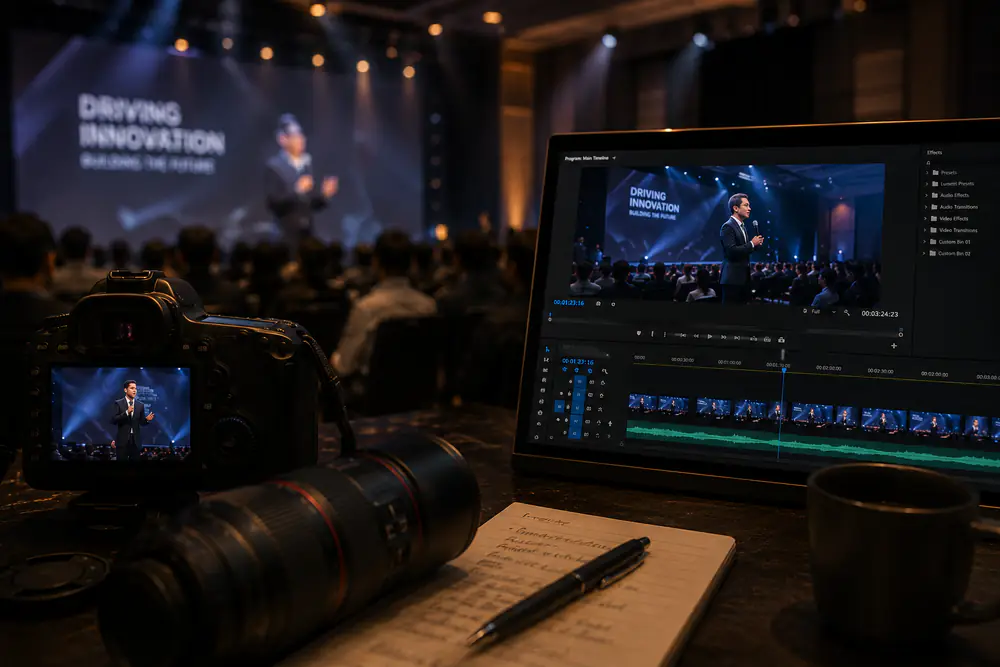
For me, this is the simplest way to look at it: photo helps people remember what happened; video helps people feel how it happened.
Why Video Complements Photography
A photo of a product launch can show the product on stage. A video can show the anticipation before the reveal, the countdown, the founder's message, the audience reaction, and the energy in the room.
A photo of a wedding speech can show someone holding the microphone. A video can preserve the voice, the pause before an emotional line, the laughter, and the reaction from the people listening.
A photo of a corporate conference can show that the room was full. A video can show the quality of the conversations, the confidence of the speakers, and the way the event represented the brand.
Video does not replace photography. It completes the story.
That is the real point. The decision is not about replacing one with the other. It is about whether the event has layers that still images alone cannot fully carry.
The Emotional Layer That Photos Can Miss
Events are not only visual. They have sound, timing, atmosphere, laughter, applause, speeches, music, silence, cheers, and reactions.
Photography can preserve a beautiful part of the day. Video preserves the emotional flow. This matters for weddings, annual dinners, award nights, launches, community events, and milestone celebrations, where the feeling of the event is often part of the value.
When people rewatch an event video years later, they are not only looking at how things looked. They are trying to feel the moment again.
That emotional layer is hard to recreate after the event is over. If it matters, it needs to be captured while it is happening.
For Business Events, Video Becomes Communication
For personal events, video is often memory. For business events, video is also communication.
A business event video can support brand storytelling, social content, stakeholder updates, sponsor communication, recruitment, sales decks, website credibility, and future event promotion. It can help people who were not in the room understand what happened and why it mattered.
For business events, video is not only memory. It is communication that can keep working after the event ends.
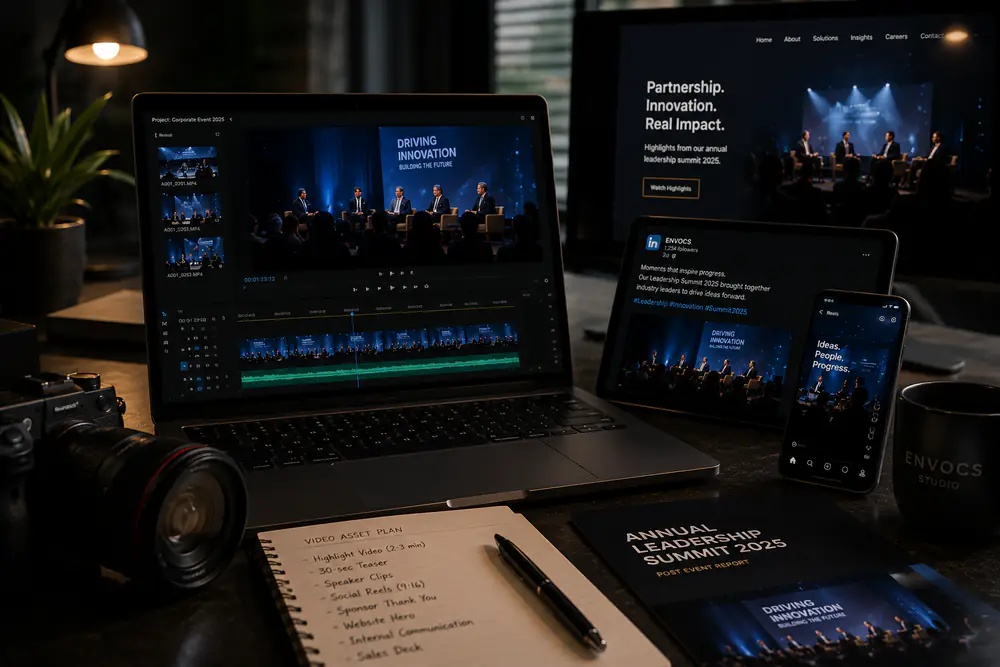
This is where videography becomes commercially useful. A good event video can make the business look active, credible, organized, and worth paying attention to long after the venue has been cleared.
Why This Matters In A Digital Market Like Malaysia
In Malaysia, an event does not only speak to people in the room. It can also travel through Instagram, TikTok, Facebook, LinkedIn, YouTube, WhatsApp, websites, proposals, and internal presentations.
DataReportal's Digital 2025 Malaysia report shows how deeply digital behaviour was already embedded in the market at the start of 2025, with 34.9 million internet users, 97.7% internet penetration, and 25.1 million social media user identities representing 70.2% of the population.
That context matters because many people will experience the event after it happens. They may not attend physically, but they can still watch the recap, hear the message, see the crowd, and form an impression of the brand.
People who did not attend may still judge the event, the brand, and the credibility through the final video.
Do People Really Watch Event Videos?
Yes, but only when the video gives them a reason to care.
People do not watch boring recaps just because an event happened. They watch when the video has energy, pacing, emotion, context, useful information, or social proof.
HubSpot's 2025 video marketing statistics frame video as a strong storytelling format for communicating brand story, value proposition, and customer relationships. That applies to event content because the story is already happening in the room. The work is to shape it clearly.
The problem is not that people do not watch event videos. The problem is that many event videos are produced without a clear reason to watch.
This is why planning matters. A generic recap is easy to ignore. A clear, well-paced video with a point of view can still hold attention.
The Mistake: Treating Video As An Afterthought
Many teams decide on video too late. The event is already planned, the agenda is packed, and video becomes a last-minute request: can someone record this?
That approach can document the event, but it often misses the best story. Good videography is not only about having a camera in the room. It is about knowing what matters before the moment happens.
Before the event, the team should be clear about a few things:
- What is the main story of the event?
- Which moments matter most?
- Who needs to be captured?
- Do we need soundbites or speeches?
- Where will the video be used after the event?
- Do we need horizontal recap, vertical clips, or both?
When video is planned early, it becomes content strategy. When it is added too late, it often becomes basic recording.
The earlier those questions are answered, the easier it is for the videographer to capture with intention.
The Real ROI Is Not One Recap Video
A business is not only paying for one recap. It is building footage that can become multiple assets.
One event can become a highlight video, short reels, speaker clips, product moments, testimonial content, behind-the-scenes footage, website visuals, and sales material. The footage can support social content, internal communication, stakeholder updates, future campaigns, and proof of execution.
Cvent's 2025 event marketing trends point to event content fueling year-round campaigns. That is a useful way to think about event footage: the event happens once, but the content can keep working.
The value of event video increases when one day of footage becomes many useful pieces of content.
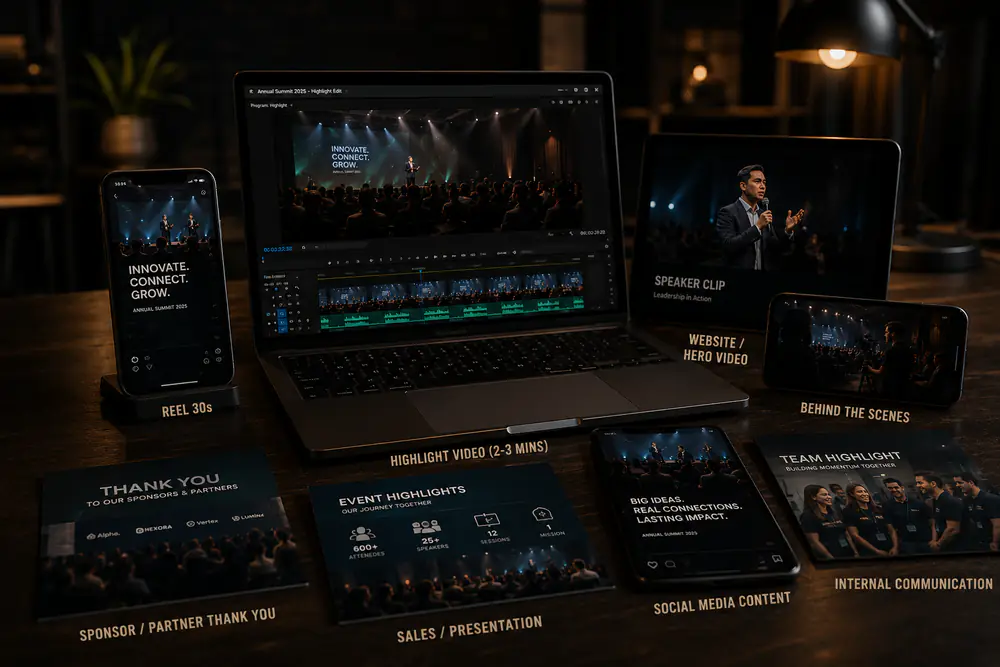
This is where the cost starts to make more sense. The video is not just a deliverable. It is a content base.
Video Helps People Understand, Not Just Remember
Sometimes photos show that something happened, but video helps people understand what happened.
For a product launch, video can show how people interacted with the product. For a seminar, video can preserve the speaker's clarity and credibility. For a brand activation, video can show the experience, not just the setup. For a corporate event, video can help internal teams, stakeholders, or future clients understand the scale and execution quality.
In business, clarity is valuable. A good event video can explain the event while still carrying emotion.
Video Quality Affects Trust
If the actual event was strong but the video is shaky, dark, messy, badly edited, or unclear, the digital version of the event becomes weaker than the real event.
This matters because many people will only experience the event through the final content. They were not in the room. They did not hear the speech. They did not feel the atmosphere. They only see what the video shows them.
If the event matters, the way it is captured matters too.
The video does not need to look like a cinema commercial. It needs to feel intentional, stable, clear, well-paced, properly edited, and aligned with the brand.
When Photography May Be Enough
Not every event needs full videography. If the event is small, internal, simple, low-stakes, or only needs basic record-keeping, photography may be enough.
If the goal is to keep a few visual memories, update an internal report, or document attendance, strong photography can cover the need. The point is not to force video into every event.
The question is not whether video is always necessary. The question is whether the event has value that motion, sound, and story can preserve better than photos alone.
If the event has sound, movement, emotion, message, or future use that photos alone cannot fully carry, videography becomes easier to justify.
When You Should Seriously Consider Videography
You should seriously consider videography when the event has value beyond basic documentation.
- speeches, performances, launches, or announcements
- important atmosphere and emotion
- a public-facing brand moment
- social media or campaign use after the event
- stakeholder, sponsor, recruitment, or sales value
In these cases, video is not just an extra. It becomes part of the communication plan.
Photography And Videography Should Work Together
The best outcome happens when the photographer and videographer are aligned, not fighting for space.
Both should understand the key moments, event flow, client priorities, and how the content will be used after the event. Photography gives the fast visual proof. Videography brings the sequence and emotion back to life.
Together, photography and videography create a stronger archive and a stronger content library.
When both sides work with the same intention, the final output feels more complete. The brand gets still images that are easy to use and video assets that bring the event back to life.
A Simple Way To Decide
Before deciding whether you need a videographer, ask a few practical questions:
- Will there be important sound, speeches, movement, or emotion?
- Will the event need to reach people who are not attending?
- Will the content be used for marketing, sales, recruitment, PR, or stakeholders?
- Will the atmosphere matter as much as the visuals?
- Will we regret not having video later?
If the answer is yes to several of these, video is probably worth considering. Not because it is trendy, but because the event has value that motion, sound, and story can preserve better than photos alone.
FAQ
Do I need a videographer if I already have a photographer?
You may not need one for every event, but you should consider video if the event has sound, movement, emotion, speeches, or future content value that photos alone cannot fully capture.
What does video capture that photos cannot?
Video captures voice, timing, movement, music, applause, pacing, reactions, and the way a moment unfolds.
Is videography worth it for corporate events?
Yes, when the event supports brand communication, stakeholder updates, recruitment, sales, sponsor value, or future marketing content.
When is photography enough?
Photography may be enough for small, internal, simple, low-stakes events where the goal is mainly visual record-keeping.
How early should videography be planned?
Plan video before the event day. Early planning helps clarify the story, key moments, format, and how the footage will be used later.
Final Thought
A photo is memory. A video is a story brought back to life.
For events that matter, the best question is not whether photo or video is better. The better question is what parts of the event you want people to feel, understand, and reuse after it is over.
Photography helps people remember the moment. Videography helps them experience the story again.